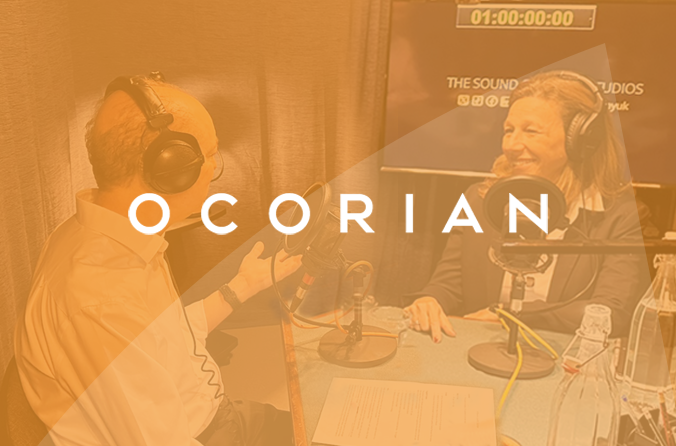
Season 2, Episode 4

Capitalising on the right strategic opportunities with Ocorian

Podcast Image
0:00
0:00 0:00
Download
Audio Transcript

Tim Smallbone

Hello and welcome to Inflexion Point, the podcast that explores those crucial moments in a company's journey that change the trajectory of success. Through conversations with business founders and entrepreneurs, we'll explore what those moments look like and how to recognise and harness them. In today's episode, we're exploring the success of the fund, corporate and trust administration business, Ocorian.

Flor Kassai

Why don't we become one of the magic circle global businesses in this industry with the highest standards of service?

Chantal Free

We were probably ahead of our market in really figuring out that we need to cater to the new client profile.

Tim Smallbone

I'm Tim Smallbone and in my 20 years as a partner at Inflexion, I've been lucky enough to witness a huge number of those moments that are a part of every success story. Inflexion first invested in Ocorian in 2016 and since then the business has gone from strength to strength. It now covers 20 key global jurisdictions and serves 8,000 clients. Joining me today is Chantal Free who was brought into the business as CEO in 2023 to navigate the company's rapid expansion. Prior to Ocorian, Chantal was CEO of Capita Portfolio and spent 23 years at Willis Towers Watson. We're also joined by Flor Kassai, who is a managing partner at Inflexion and heads up our buyout fund. Flor led our investment in the business and has been on the board ever since. Welcome to you both. Thanks for joining me. Chantal, can I ask you first of all to tell us what the company does? I mean, its description is a fund, corporate and trust administration business. What does that mean?

Chantal Free

Well I think I describe ourselves in simple terms as we're an asset servicing business. So we service either the asset owners, ultra high net worth individuals or corporates, or asset managers, fund managers, PE houses, infrastructure and real estate funds. And what we do essentially is we get them to do what they know best, which is their core business, and we try to service them in everything else, like their fiduciary responsibilities, creating entities for them, accounting, administration, allowing them to understand regulatory and compliance requirements, doing their regulatory filings. We are now 10 times bigger than when Inflexion first invested. We have six times more colleagues and we now operate in 20 geographies.

Tim Smallbone

So we've grown enormously in that time.

Chantal Free

Very, very significant.

Tim Smallbone

So when you say asset owners, you're saying people who are managing pots of money for whatever reason, as you say, you're high net worth individuals, corporates, and these funds, these are like pension funds, presumably. Those are our customers, are they? Those are the people we service. But we're a very international business. What service do we provide in all these different countries?

Chantal Free

Well, I think where we need to connect with our clients is where they are domiciled themselves, but also where they domicile their assets. So typically we have colleagues who connect with our clients in the significant financial centres like New York, London, Dubai, Singapore, Hong Kong, etc. But also we have colleagues who service them where those clients domicile their assets. So Luxembourg is a very good example for fund domiciling, Ireland in the same way, but also the Channel Islands where most of the trust gets located, the Cayman Islands or Bermuda or Mauritius.

Tim Smallbone

Your own journey to get here, where are you from? Just a little bit of background on yourself. Your journey to get to Ocorian.

Chantal Free

I've spent most of my career in financial and regulated services, started my life as a consultant, telling people what to do, and then slowly I moved into managing larger and larger businesses, spent most of my career in publicly listed organisations. So for me to move to Ocorian, that is private equity backed, was actually a very significant change. But I do like change and a lot of things in my career have been driven by the opportunity to crack that next big complex problem, difficult nut to crack. And I think the move to private equity was one of those and it's been fascinating.

Tim Smallbone

And Flor, if I turn to you, a truly international background from Chantal, do you just want to introduce yourself a little bit?

Flor Kassai

Yeah, sure. So I have been at Inflexion now for 14 years. After having spent five years with HG Capital and at Inflexion, I started my career with business services investments. And I was asked to run the buyout fund in 2022 and I was promoted to managing partner a couple of years ago.

Tim Smallbone

My boss.

Flor Kassai

Colleague.

Tim Smallbone

So Flor, you led the investment going back to 2016. So what attracted us, Inflexion, why did we invest in this business?

Flor Kassai

Yeah, so when I joined Inflexion, I wanted to make a mark quickly. And the last deal that I had done at HG Capital was a business called ATC Group in a similar sector. So I joined Inflexion, I said, right, you know, I want to make my mark, I'm going to try to find a deal in this space. And I sort of did a lot of work and eventually ended up investing in Sanne. Sanne in 2 1/2 years was a massive success for us. We grew the business and listed on the London Stock Exchange and made four times our money, 80% IRR. So as soon as we sold Sanne, we said, right, we need to come back into the sector. Why do we like the sector? There's a lot of things we like about it. When you look at the revenues of businesses like Ocorian, they're very recurring in nature. At the same time, for those clients to move service providers is incredibly difficult. We call it, you know, the revenues are very sticky. Unless you do a horrible job, they'll stay with you. And on top of that, the type of services we provide attract high margins or EBITDA margins, depending on what part of the business mix you're in, could go anywhere from 20 to 40%. And the beauty of it also is that it's an industry that is very capital light. And therefore, all of that EBITDA translates into cash. So there's all things to like about it. That's on the organic side. But of course, it's an industry that is incredibly fragmented. So long story short, there's a number, a large number of potential acquisitions or smaller businesses that can be acquired. And therefore, the larger businesses like Ocorian have used the last number of years to consolidate, pick the best ones, and consolidate them into a larger group.

Tim Smallbone

You talked earlier, Chantal, about the change that's gone on. The business has been massively changed since the original investment in 2016. Was this a process led by acquisition, that Flor refers to?

Chantal Free

A combination really and I think Ocorian and the board and Inflexion of course as part of that have been very clever with regard to thinking through the mix of organic and inorganic growth. If you think where we have started, we've started as a Channel Island based trust and corporate services business. So essentially serving the asset owners. And I think that was a capability that very much we felt comfortable with and we knew. But we wanted to get into very much in the alternative space. And that has been very successful actually. If you think about it today, 1/3 of our business is in the traditional trust and corporate services business and 2/3 in that alternative space.

Tim Smallbone

And just what do you mean by alternatives?

Chantal Free

And what I mean by that is servicing really the asset managers. So therefore investing into fund services, investing into capital markets, also investing into consulting our clients around regulatory compliance. So I think that has been a very strategic move to not just grow globally and increase our footprint, but also where really we could add value. So I think we started with a strategy with regard to business mix and the footprint that requires. And then we've made some, I believe, very strategic decisions around which ones of these gaps and opportunities we exploit organically and which ones we go about inorganically.

Tim Smallbone

And what led to that decision? Just opportunity.

Chantal Free

I think it was really strategy driving how much of that capability we've actually got and how quickly we can scale that up, that assessment. And in some cases where we don't have the capability, we have to go and buy it. So the first capability in the first group is really our trust and corporate services business, where we have done quite a lot of organic growth, but also we thought that to really jump the categories or leagues, we have to make a significant acquisition. And that was really the Estera acquisition that Inflexion did at the time. And they merged Estera with Ocorian. And Estera at the time was as big as Ocorian. So we were really, overnight, we were doubling the size of the organisation. So that was a scale acquisition. And then since then, we have actually inorganically built around it. And frankly, I think that's a very significant differentiation from many of our competitors. Because Ocorian doesn't do a dozen acquisitions every year. We do actually a smaller number of strategic acquisitions of really good businesses that have the potential to fit in with the rest of the portfolio and scale up.

Tim Smallbone

Can be specific for a particular territory or they could be specific for a particular service line or a particular customer base. It's a mix and match.

Chantal Free

Correct. Correct. I think we are good at finding the gap that we have, whether it's geography or capability. And I'll give you an example. Our Reagan compliance service line, we were very aware that our clients more and more require advice on their commitments. and making sure that they comply with all the requirements. And we knew that would have taken a long time for us to build from scratch. So we built and we knew that we had to start with a presence in the UK. So we went and bought an organisation. The first organisation that we bought was bought in the UK. The second one that we bought was in Guernsey. The third one that we bought was around getting geographical coverage. So we had the core capability. So therefore, in the third one, we acquired capability in Asia and in the US.

Tim Smallbone

And this was in the higher added value services, the consulting, giving advice.

Chantal Free

Correct.

Flor Kassai

But I think the other thing that you do particularly well, Chantal, that our competitors don't do is that you're ruthlessly focused on integrating these acquisitions so that within a year you cannot really differentiate what was the business and what is the, what was the business we acquired and what is the core business that absorbed it.

Tim Smallbone

Flor the biggest Inflexion Point in the life of this business was the Estera deal, which was a doubling overnight. Pretty daunting.

Flor Kassai

Yes, it was very daunting. Why not speak the truth? So Ocorian at the time was making 20 million pounds of EBITDA. Estera was making double that. And we were debating as an investment committee what to do with Ocorian because we had achieved the five-year plan in 2 1/2 years. And so therefore the view was, well, maybe we should play a longer game and keep Ocorian for longer. But then what is the thesis? What are we pursuing? What will this business become? And the thesis then was to say, why don't we become one of the magic circle global businesses in this industry that we will be one of 4, 5, 6 players able to service the best blue chip largest clients across several jurisdictions, across a number of service lines that they will require with the highest standards of service. So that was the thesis. Of course, the thesis sounds great on paper. The execution of the thesis is a challenge. Putting the businesses together was not easy. What became also made it even more complicated was that completion happened literally 3 weeks before we went into lockdown for COVID. And in people businesses where you need to integrate, there's a lot of conversations, a lot of interactions that are required. So that period was incredibly difficult. I remember having sleepless nights about how are we going to do this properly without people feeling frustrated and eventually leaving because it's a business where people have options and if they're not happy, they'll walk. And then the second challenge from there was that Estera was organised in a jurisdictional way, meaning that each jurisdiction had their own head and their own way of servicing the different service lines. Of course, if you want to now move to the thesis I describe of servicing clients across multiple jurisdictions, those clients want a one single point of contact. And therefore, what you need to do is to revert that organisational matrix to a business line matrix and have the therefore now the business lines driving the service provision across the different jurisdictions. That, which again sounds easy to say, is very difficult to implement and requires reprocessing of ways of doing things, getting people who have been used to doing things in a certain way to change the way that they're doing it so that everyone does it the same way, so that the client can get the same service in Hong Kong, in the UK or in Luxembourg. And then once you've done all of that, of course, is to roll out technology to be able to apply that and automate that across the board.

Tim Smallbone

An amazingly bold thing to do, try and double the business overnight. You came in, that had been done, but presumably the aftermath was evident everywhere.

Chantal Free

Yeah, I mean, thankfully, I came in where the organisation had already pivoted to its operating model. And I think that was, again, a very bold but clever decision. And we were probably ahead of our markets and our competitors in that respect in really figuring out that our client profile with our new scale has changed and therefore we need to cater to the new client profile who wants more global solutions delivered consistently. So things have moved into global service line and global functions.

Tim Smallbone

We have businesses in Inflexion that are international, but Ocorian's unique in being in just so many different territories, including Mauritius and lots of territories we otherwise don't have any exposure to. What's it like trying to manage a business that's just so international?

Chantal Free

Yes, it is international, but the things that we do are very similar, right? And if you always start from the client as opposed to from yourself, I think you find more commonalities to your people and colleagues and your culture than you would otherwise think about. Because it's very easy for me to think about, oh, Bermuda is so different than Jersey or Hong Kong. But actually, when I go round our offices and I went and visited all our offices when I joined. There is so much commonality with regards to our culture and our client focus. And what we try to do in many of our conversation internally, we try to start with our clients and then you find a common ground very, very quickly in the language that our clients use. What is different and that is almost shades of it is the regulatory requirements in different geographies. But again, what we find is when you stand back and look, all the regulators are trying to drive to the same outcome. And frankly, which we all start trying, it is around protecting investment.

Tim Smallbone

Interesting. It's a changing world, changing world of regulation, changing world of technology. I just wanted to focus on those two at the moment. Do you face increasingly tight environments to operate in? And I'm particularly interested in AI. I mean, presumably that could be a major factor in our services going forward.

Chantal Free

Huge opportunity, huge opportunity. And I think it's the way, again, the way I look at it is if you're on the front foot, it's a huge opportunity. If you are too slow, it's a huge threat. And we want to be on the front foot. So we've invested this year, for example, in quite a few initiatives, not just that helps us as an organisation and makes us more efficient, but also improve significantly the client experience. And that's really the opportunity that AI provides. If we can reduce the time that we vet clients, if we can onboard clients a lot faster, if we can produce the board minutes of meeting a lot faster because we have the advantage of using AI, that's a good thing. I feel the same a little bit about regulations, right? You can look at it at regulation and regulators as a threat, but we're trying to do the same thing. We're trying to find a safe environment for assets to be kept, managed, domiciled, etc. And that's what the regulators are trying to do too.

Tim Smallbone

Let's look forward now. Where is the business going? What are the business objectives over the next three years?

Chantal Free

Our challenge now is to go into the US. And that is a very exciting challenge. The US is growing twice the speed of Europe at the moment. So we have done a big strategic review halfway through the year and we have identified the US as a gap in our footprint with regard to fund services. That has allowed us to now make an acquisition. We have appointed a new leader, we have doubled the size of our sales force in the US, and we have also appointed an implementation leader. In addition, while I used to have only one ExCo member in the Americas, by next month I will have three of my executive committee in America, right? So huge opportunities still for us to grow.

Tim Smallbone

What other territories have you got your eye on?

Chantal Free

That's a good question. Of course, as our clients and where the capital gets generated or deployed evolve, our business evolves to where we've seen very significant growth this year is the Middle East and Asia. Our Asia business has grown around 20% this year. Partly that is because of the wealth that is being generated in those regions. So we're seeing a lot of wealth being positioned around Singapore in Asia. So we're investing more and more with regard to our offerings with family offices. The second very exciting region for us is the Middle East. So we do manage the Middle East out of Dubai. We are in the process of applying for our fund licence with the DIFC and that's very exciting for us as many of our clients are looking at investment opportunities in the Middle East. We also need to look at the developments in Saudi and what kind of presence we should be having there.

Tim Smallbone

Huge opportunities for us, lots of utilities to go.

Chantal Free

Correct.

Tim Smallbone

Flor, when you look back on this journey that we've been on, what would you highlight as being where Inflexion has made a difference?

Flor Kassai

There's so much actually that we've supported the business. Given the massive transformation that business has gone through, right, and the scaling, I think we start with the business development function, the professionalisation of the business development function. On the technology side, again, as we talked about, the rollout of technology is super important in these businesses, mainly to provide good service for customers. But of course, that's the tip of the iceberg because to be able to roll out technology, you first need to process map your processes, ensure uniformity of processes across the different markets, and then behind that rollout, the technology. So we did a lot of work there. international expansion. So when we invested in the original Ocorian business, it was 6 jurisdictions, some of them very subscale. We increased the scale of our, for example, Luxembourg area, but then we also added, as we said, Estera, and then we continued to add businesses like Nordic Trustees in Norway. I think the other area where there has been a lot of change has been in the team itself because you have to think about the challenge of growing a business so quickly in a very short period of time. I think if you grow a business organically, you give people the chance to learn the new skills and catch up. But it's very difficult for an individual when you say from one day to next, right, we're doubling the size of your business, for them to actually keep up with what are the new practices, the new ways of working that you need to manage a business of that scale. And therefore that required changing roles, upskilling people, supporting people, which again was not a straightforward journey. So we have our fingerprints in many, many parts of this business.

Tim Smallbone

Well, it's an amazing story of change. You get a sense for how this change was a result of vision and some fantastic leadership. So thank you both.

That's it for this episode. My thanks to Chantal and Flor for joining me. Remember to subscribe to Inflexion Point wherever you get your podcasts so you don't miss an episode. And of course, you can check out our previous instalments too. Thanks for listening.

About the episode

Inflexion Point tells the story of Ocorian, the Channel Islands trust company that became a global fund, corporate and fiduciary services business, and how it grew ten times larger in under a decade. Host Tim Smallbone is joined by Ocorian Chief Executive Chantal Free and Flor Kassai, the Inflexion managing partner who led the 2016 investment and has sat on the board since, to trace the journey from a Jersey trust business to 20 jurisdictions and 8,000 clients. They reflect on the moments that shaped it: the 2016 carve out that made Ocorian a standalone company, the move into alternatives to serve fund managers as well as asset owners, the 2020 merger with Estera that doubled the business three weeks before lockdown, and the switch from a jurisdiction-led structure to global service lines. Along the way, they talk US expansion, buying capability rather than building it, why revenues in this industry are so hard to move, and why AI is an opportunity for anyone on the front foot and a threat for anyone too slow.