Season 3, Episode 5

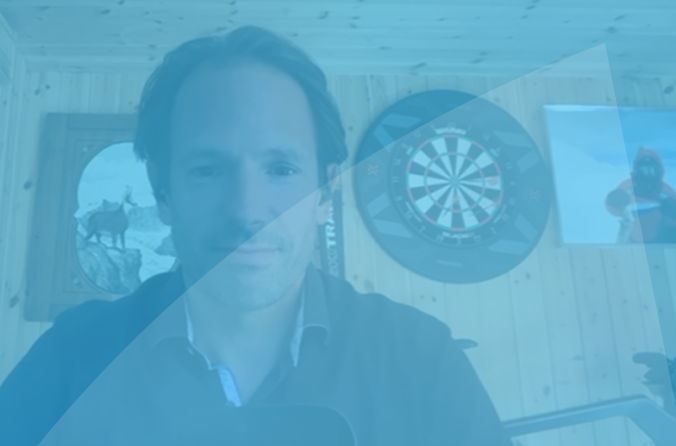
Rethinking AI as a superhuman, not software, with Greg Nieuwenhuys

Greg Nieuwenhuys, AI expert
0:00
0:00 0:00
Download
Audio Transcript

Tim Smallbone

Hello and welcome to Inflexion Point, the podcast that explores those crucial moments in a company's journey that change the trajectory of success. Through conversations with business founders and entrepreneurs, we explore what those moments look like and how to recognise and harness them. I'm Tim Smallbone and in my 20 years as a partner with Inflexion, I've been lucky enough to witness a huge number of those moments that are a part of every success story. In today's episode, we're turning our attention to the technology that is going to define which businesses thrive over the next decade and which get left behind, artificial intelligence.

Greg Nieuwenhuys

The big challenge here is learning how to work with AI and unlearning how we have worked. It's just not very comfortable. And I think that is particularly why the barrier is people and culture.

Alex Mathers

There's a kind of show, not tell that's really important here. Going and telling CEOs in our portfolio, you should be thinking about this is not nearly as effective as actually showing them what's possible.

Tim Smallbone

Two and a half years ago, a serial CEO walked into a one-day training session on generative AI. He walked out convinced the technology he had just seen was going to reshape everything and that he was going to be at the head of it, not playing catch-up. Today he is chair of the world's leading darts brand, Nodor. Chair and senior partner of AI advisory firm Waimakers and one of the most listened to voices on AI in the European private equity world. He is also for good measure an ultra endurance athlete who has skied down an 8,000 metre Himalayan peak with a broken rib. And his name is Greg Nieuwenhuys and he joins us today. Also in the studio with us is Alex Mathers, partner and head of Value Acceleration at Inflexion, whose team supports our portfolio companies on growth, including AI adoption. Greg and Alex have been working closely on Inflexion's own AI journey. Greg, Alex, welcome to you both. Thanks for joining me.

Alex Mathers

Good morning. 

Greg Nieuwenhuys

Hi, Tim.

Tim Smallbone

Greg, first of all, can you just tell me a little bit about your background? You are now a tech guru, you're now an AI trailblazer or whatever your title is. Were you always a techie?

Greg Nieuwenhuys

Good morning, Tim. Interesting question, because I think in what you just shared, I think Trailblazer is probably more correct. You know, I've always been kind of climbing big mountains, running very long distances. I've never considered myself a tech guru. I have an engineering background, but I've been CEO and chair of, you know, very exciting consumer businesses like Mammut and Wattbike and now Nodor that is backed by Inflexion. And I've always been interested by tech and interested by finding I would say, almost unfair ways to create an unfair advantage against your competitors. And when I went to this training and saw the power of AI, I thought, this is going to become quite big.

Tim Smallbone

So tell me about that moment. That was a real Inflexion point for you. You were interested in generative AI, obviously, because you went along to find out what it was all about. What did you learn?

Greg Nieuwenhuys

Well I was probably quite sceptical going in, but there was a lot of chatter about AI, and this was the summer of 2023, so three years ago. And I signed up, I went there, I thought like, it's going to be a waste of my time. And at the end of the day, I realised I can either fall behind and become a laggard, or I can fully lean in and hold on for dear life and be at the front runner of what's happening here. And the latter happened, and it's been an amazing experience, but it was everything but uncomfortable, because I've had to learn faster than I ever had, and I've also had to unlearn so many of my old habits that it's completely changed how I work in very good ways, but it's not necessarily been a comfortable journey.

Tim Smallbone

For those of us who are not techies, let's just start from the beginning. What exactly does AI do?

Greg Nieuwenhuys

Well, that's what I realised on this day. I realised two things. AI is intelligence. It can basically think in a very similar way to humans, and it can interpret context, and it can create poems, IC memos, marketing campaigns. And some of these things, it does actually today already much better than most humans. And on some of these areas, it's actually not so good. And it's not always easy to predict when it will be very good or not so good. And that's why I think there's a lot of mistrust and a lack of understanding, and that holds a lot of people back from using it. But once you get the gist of it, it is extremely powerful.

Tim Smallbone

So how should we think of it? Should we think of it as something which is going to replace people?

Greg Nieuwenhuys

I don't see it that way at all. Although if you ask me, like, am I nervous and also a bit afraid of what's going to happen to the world? I would be naive to say no. But I'm very excited about what AI can do for work and for people. And I see it very much as something that actually enhances and augments the intelligence that humans have. And if you think of the way we've worked in the last 50 years, kind of sitting behind a desk, writing reports, reading emails, sending reports, making PowerPoints, Excels, I don't think is what the humans were made for. And I think in a world where you can have the AIs to make the Excels, do the research, follow up and do all the hard work, and we as humans can actually focus our time and energy on people, and our customers and our investors, our teams, I think that's much more exciting. So it's all about amplifying the human skills that we care about most, and which happen to be the most important, I think, to lead an organisation.

Tim Smallbone

I suppose we're going to spend quite a bit of time talking about how people get to use this clever skill. Just to sort of carry on with the story, you had this moment where you went to this presentation and you learned about it. And you then, did you create Waimakers, or was Waimakers a business that already existed? You're now leading the charge.

Greg Nieuwenhuys

So, I mean, I came out of this session thinking, I need to do something. And I had no idea what, but I was clear, like, if I don't do something every week, this is going to run away from me and I'll just get very busy and focus on other things. So the first thing I did is I kind of gathered a group of people and we met every week to speak about AI for an hour. Then I reached out to typical consultants, McKinsey, BCG, Accenture, and I asked them, please help me implement this at Mammut and Wattbike, the companies that I was chair of at the time. And what they came back with was very long-term, very strategic. It was not practical. And it was not at all people-centric. And that's when I realised, I don't think this is what it's about. And I met Wouter, who is an entrepreneur, and he had just founded Waimakers, and I was the third employee to join. And quickly it became clear, this, I believe in AI, I believe in him. I think this can become very big and very powerful. And I think it's a bit of magic that we have that we want to give to our customers.

Tim Smallbone

So you met with a colleague and the pair of you shared a vision for how AI could influence people's behaviour. And that's — is that the nerve of what Waimakers does? It's teaching people how to use it.

Greg Nieuwenhuys

So I think we start by shifting what I call a genuine lack of understanding and fear and overwhelm into a sense of genuine excitement and ability to do more and better work within a given week. And that's where we start. And then we kind of look at a company and say, why does this company exist? And why are the customers buying the service or products? And how is AI going to help the people make that customer proposition better and faster, through faster innovation, faster international growth, more personalised marketing, whatever it may be. And then we make it happen through those people. So what we do is we don't deliver a report, but it's actually our work is that the people work in a different way.

Tim Smallbone

Getting the people to work in a different way. I'm going to turn to Alex now. This is all about changing behaviours. So just first of all, Alex, you head up our Value Acceleration team. So getting people to change their behaviours is what you do, even before AI came along.

Alex Mathers

Yes, and for me, this is the latest in a long line of technologies that can help change the way that businesses work. And it is the most exciting thing I've seen, I think, in my entire career. But unless you change the way that people work, you change the processes, you rethink the way the business works, then you remain on the surface. So you get individual productivity benefits, for sure. And I think everyone in our company has seen that over the last few months. But you don't get that real transformative power until you start reimagining the way that things can be done.

Tim Smallbone

So it's a technology that can be applied to virtually every business.

Alex Mathers

Yes, our view is that every single business can benefit from AI in terms of back-office processes, transforming the way they do sales and marketing, for instance. There are then some particularly exciting opportunities with businesses where you can change the way the service is delivered using AI. So for instance, I've been working with all of our consulting businesses over the last couple of years, where there's an opportunity to take the data they harvest as part of their consulting projects and productise that to give a whole new offering to their businesses. And that is taking AI, applying it to a data set that they get from their customers and creating something brand new that they couldn't have offered a couple of years ago.

Tim Smallbone

Greg, I find this difficult to understand. There are processes presumably in every business to which AI can be applied, as Alex referred to them, the back-office processes? Is that where it is at its most effective?

Greg Nieuwenhuys

So I agree with Alex that this applies to every business. And I would also go and say every function within every business and probably also every process within every function. I don't believe there are processes within a business that cannot be improved by AI. And the back office is easy. And I think one of the mistakes made is that people often think of AI as an efficiency tool to do things faster and therefore as a way to save costs. But as Alex is saying, the much more powerful use case is to reimagine your value proposition because everyone is using AI now today. So if you're not improving what you offer to your customers every day, you're going to fall behind. And that's inevitably where the vast majority of the energy of leadership should go towards creating that faster value proposition, which, by the way, the people who work in the company care about the most. And if this is all about bringing people along on the journey and getting them excited, of course, customer satisfaction, faster innovation are what really get people out of bed. And those two are very linked.

Tim Smallbone

So you chair Nodor for us. And obviously, we've already done a podcast on Nodor. So everybody listening will be entirely familiar with Nodor. But just in case somebody is listening who isn't, just tell us for a moment, Greg, you chair Nodor for us and have been working on AI with them.

Greg Nieuwenhuys

Nodor is the leading manufacturer and distributor of darts, dartboards, and everything darts in the world has been growing extremely fast. Inflexion bought the business 18 months ago. It's been a phenomenal journey, and I've also been very impressed by working with Alex and his team on this case. And, of course, last year when I joined as chair, one of my priorities is like, we're going to start working a lot with AI. I think Nodor came from a very low base. A lot of processes were still manual on paper, probably, you know, the worst quartile that I've ever seen in my life. So the journey there and the overwhelm in the team was much larger than I think an average company would face. I think my ambition for the first year was higher than what I achieved, and we only got to personal productivity. And the main reason why, I think, is because as the founders moved out of the business and we were hiring a professional leadership team, there was a lack of leadership, a lack of vision of exactly where the company was going. And that comes back to the point that AI adoption has to come from the top, with a very clear vision and a very clear understanding from the CEO and his team around what AI is and how it can actually improve the business. And that's what we didn't have in place yet. So we made some progress. But this year, we're making much faster progress, particularly, for example, on how we create our marketing content.

Tim Smallbone

And that's a common theme that you have identified in businesses you've worked with. It's got to start from the top.

Greg Nieuwenhuys

Yeah, no question. Because this affects every process, every function. There's going to be resistance in the company by a lot of people because they're afraid, they don't understand. And it's the big unlock to faster value creation. And who owns that? It can only be the CEO, in my view.

Alex Mathers

I think there's another thing to add there, which goes back to Greg's point about the kind of transformational kind of almost epiphany type experience of seeing the power of this firsthand. Unless the CEO has had sufficient hands-on experience to understand just what's possible, it's very hard to internalise how transformational it might be for their business. And therefore, this is something that we've always focused on. There's a kind of show not tell that's really important here. Going and telling CEOs in our portfolio, you should be thinking about this, is not nearly as effective as actually showing them what's possible, showing them a small prototype of how you might automate a process in their business, because that's what really brings it to life for them.

Tim Smallbone

And you would follow that, would you, Greg? It's the show not tell to get people to understand what you can do.

Greg Nieuwenhuys

Completely. I mean, I see a lot of AI strategy decks. I mean, and most of them are useless. Because you can talk a lot about AI, you can kind of try and predict the future. But if people don't understand how it applies to your business today and tomorrow and haven't seen the use cases around how it's going to transform marketing or sales, that strategy paper is useless. So we spend, I would say, when we, the initial touch point with the management team is mostly about showing them use cases that apply directly to their business.

Tim Smallbone

So I understand that it will help you do data processing, but how does it actually, how do you apply it to, you both referred to the value add, to the improving the marketing, improving the sales. I don't understand how processing, how a computer program can make you, make or improve your value add.

Greg Nieuwenhuys

Well, that's interesting because I would not speak of this as a computer program. I think the better analogy is to think of it as a superhuman who has unlimited knowledge and who's very intelligent and can think and reason, but needs a very good input from its co-worker. And the co-worker is the person basically driving the car who is steering the AI. This is the, you know, the same power as someone in Alex's team, but that may fail on some, you know, some projects, but actually do extremely well and be extremely fast on others. And that's how you should think about AI. And they can go in and solve, you know, I use AI for some of the most strategic questions I have. And also surprisingly enough, my role as chair is very much about stakeholder management and creating a strong team at the board. I use this a lot to think about relationships and how to get people to work in the best way possible. And it's taken away so many blind spots where I now feel like I have an executive coach alongside me all the time that I can go back to and ask, what do you think about this? And what do you think about this? And what am I missing here? And it just elevates the type of leadership I can provide to Nodor, for example.

Tim Smallbone

And it learns, does it? You go back and ask it another question and it learns from the answers from the previous ones. Is that, to get that sort of level of insight, you must have built up a lot of knowledge within the tool.

Greg Nieuwenhuys

Yeah, so I think, I mean, this is probably, I often speak of kind of AI usages, there's a few gears. Gear one is basically shifting from riding a horse to driving a car and writing good prompts. The AI in the chatbot does not learn. It has a limited memory. But if you work in tools like Codex or Cowork or Claude Code, you can create a self-recurring memory that learns on the go. And where the AI has stronger context, that's where you get much, much better results. So I would recommend everyone to start working in that direction of really having an AI that works alongside you, which is agentic. And my AI has access to all my emails, all my files, every single meeting I've had in the last three years and therefore it often knows better than I do what I should be doing.

Alex Mathers

The key point there which I think is interesting, which is AI is as good as the context and data that you can feed it. Otherwise, you've got a kind of superhuman intelligence. I used to semi-flippantly talk about AI giving you infinite interns. I think that's unfair now. The level of performance you're getting is significantly higher, but the concept is right. You're getting an infinite pool of people that have no prior context as to what you're trying to do. They're fresh into your organisation, if you like, and therefore they're only as good as the context and data that you can provide them. And so if you think about this as kind of waves of development, wave one of development is, to Greg's gears analogy, you're working with the tools out-of-the-box and you are getting some personal productivity gains and things like that. Wave two, I would argue, maybe there's two kind of parallel streams here. One of them is improving the way that you can feed context and data into that. So Greg talks about giving his agents access to all of his emails and context data. So that's providing a really rich stream of context into the application. One of the things that's really important for, I think, all businesses doing this is to, whilst they're focusing on adoption of tools and driving in the first and second gear, they’re building the platform that allows them to feed all of that context and data into AI, because that's not trivial for businesses. And unless you're in parallel building that up, I think you lose the ability to shift into fourth, fifth, sixth gear later on.

Tim Smallbone

And Greg, you've gone from to many, many companies now. What are the most common misconceptions? What are the most common sort of trip wires that people fall over as they try to adopt these tools?

Greg Nieuwenhuys

Number one is that the leader is not spending time using AI, solving his or her own problems with AI. So that's number one. Two, I think that it's a strategy paper rather than real doing. And the best value there is just free up an afternoon and go and try and solve your problems with AI, hands-on, in the tools, and if needed, you might need some expert to kind of guide you around the way. Three is thinking that this is mostly a technology challenge and it should be led by the IT team, whereas this is all about people and about your strategy and value proposition, so it needs to be owned by the CEO. And four, I think I see a lot of speak around this is all about costs and we should save costs, which I think, to my earlier point, the real value sits in strengthening your value proposition. But the other problem is that if you focus on cost only, of course, this will scare your people a lot more. And this is not how you drive the adoption and the excitement that actually makes work much more exciting in a business. And I fundamentally believe that AI can be very powerful, but it should also make working a lot more fun for people in the business.

Tim Smallbone

So you, amongst your many clients, have Inflexion Private Equity. Of those four sort of tricks — the leaders do the real doing, seeing it as a tech challenge rather than a people challenge, and the cost — where have we been stumbling?

Greg Nieuwenhuys

I need to be very careful here, Tim. No, so I can be very honest as well. 

Tim Smallbone

Particularly about the leaders.

Greg Nieuwenhuys

Well yes, exactly. I mean, I think you all know Flor is an amazing example, and I think she's put the bar very high in terms of expectations and her own usage.

Tim Smallbone

That's Flor Kassai, the managing partner of Inflexion.

Greg Nieuwenhuys

I think when we started discussing this with Inflexion, you know, six or nine months ago, I think I said at some point, Inflexion is probably a little bit behind some of its peers. And to me, it was surprising because I see Inflexion as a very technology-savvy entrepreneurial fund that moves very quickly. If I see the progress made over the last six months, I would completely say, I think you're ahead of most of your peers in the mid-market. And I think it's thanks to Flor, and it's thanks to a lot of hands-on building that we've done, a lot of training. And I remember we had a session with all the partners, which we call an AI hackathon, which is basically reimagining how would we source deals and execute them in a world where everything was AI enabled. And the beauty of it is that all the partners spent most of the day building things in AI tools. And I think for a lot of them, it was a realisation like, oh my God, if I can do this work in three hours, which I would have thought would have taken me three weeks, why should I ever go back and not use this again? So I think that, for me, was a step changer.

Tim Smallbone

As I've been listening to you both, I've been trying to ask questions, putting myself in the position of a CEO, a business leader who feels as if they're a bit behind, whose company is not adopting AI. How much does it cost to do all that you're talking about? Doesn't sound cheap. And how confident would you be of a rapid payback?

Greg Nieuwenhuys

Yeah, so I think probably the most expensive thing you can ever do in your career is not to adopt AI seriously, right? That's the obvious thing to say here. Of course, token costs have exploded. Well, the costs are coming down, but the amount of token usage is going up, and as a result, the overall cost on tokens is going up for businesses. I would say that this is still a very small factor compared to what it is to do that work with people. I think a mistake I see a lot is that with any change programme, you have to assign a goal, a KPI, an owner and a timeline. And that is something I don't see happen often enough with AI. They kind of set off and say, let's use all these tools, let's burn all these tokens, but what are we actually trying to achieve, and how are we going to measure it, and who is accountable? I think that part which, of course, all leaders have done all their career, but somehow forget to do it here. So that would be my one recommendation. And then you can track that ROI, I think if you see that the leader is stepping in, the ROI will be very quick.

Tim Smallbone

That's the tricky bit. You've just said, to make it effective, you need to set a clear objective and then you can measure against an objective. For the average manager, okay, I want this level of extra sales or something he can get his head around — knowing what it can achieve, where would I know if I was doing that? Where to set the objective?

Greg Nieuwenhuys

Yeah, I think you don't know until you've spent enough time in the tool trying to solve some problems. So maybe, I mean, that's another mistake I see is that people set too big goals, which take too long time, and people get demotivated and defocused. I would set at the beginning, maybe a weekly goal. And the weekly goal might be, Tim, I'm going to spend four hours using different AI tools and I'm going to do some of my work. I'm going to get it done with AI. That might be the goal the first week. And then the second week goal will be bigger. And then you will soon become very proficient at defining more ambitious goals that are realistic.

Alex Mathers

I do think actually one of the big things that we're going to see in the next 12 to 18 months is a lot more discretion around the models that are being used, because as Greg mentioned, the token consumption is going up, the cost of Frontier models is going up, you know, Fable is twice as expensive for the same token volume as Opus, which is I think twice as expensive as Sonnet. But you don't need to use those Frontier models for the vast majority of everyday tasks that businesses face and that kind of discrimination around actually what model do I use for that task is a whole new set of things for businesses to learn.

Tim Smallbone

Is there a risk, Greg, that you say, right, I'm going to go down this line and you end up buying the Betamax or the VHS? I read some of that there's a risk that ChatGPT is going to go the way of Firefox. Is there a product you should buy and you shouldn't buy?

Greg Nieuwenhuys

I think you should buy the product. And if you want your company to adopt AI, you should be paying for AI. I think one of the biggest mistakes I see is also shadow AI, people just using free tools which are accessible, but that gives a huge data protection issue. And also you don't have access to the frontier and those are dumb models. I mean, if you're using ChatGPT or Claude or Gemini, you're in a very good place. And they all have differences in terms of what they're good at, but those are all three very good. Copilot has made some improvements, but I would say does not meet, you know, does not come close to ChatGPT or Claude at the moment.

Alex Mathers

The rate of progress means that some things that we would do today in a custom fashion in Claude or ChatGPT will just be built into products that people are using. And so I think the risk is less that you pick Claude or ChatGPT and you pick the right horse because actually what you learn about how you automate is much more generic than it is when you're locking into a kind of ecosystem. But you do need to be careful about making decisions about where you have an opportunity to win by being cutting edge. So for instance, where it's transformative to the service you give your customers, versus where in six months time it's likely that this is going to be something that is just built into Salesforce or whichever CRM system that you're using. So it's not to say that there aren't gains to be had on both counts. It's just the window to benefit from the gains on the things that are just going to get baked into products is likely shorter.

Greg Nieuwenhuys

Yeah, I would agree. And I would say I think it's important to be tool agnostic. And I see people focusing a lot on kind of which tool do I need and which use case do I need. It's the wrong question. The question is kind of why does your business exist? Why do your customers come to you and how are you going to make that better? And then what is the processes behind that people have to follow to get there? And then which tool could help us solve this?

Tim Smallbone

Inflexion operates in the mid-market across the whole of Europe. Is this a market where AI particularly has great application? Or is AI really for big, large enterprises?

Greg Nieuwenhuys

Yeah, so I think this is different than what we've seen in the past. And I think two years ago, it would have been kind of the mega funds that were ahead in terms of AI. If you then think that culture, leadership, mindsets, and the people and how people change how they work is the bottleneck, of course it's much easier to realise that in a mid-cap environment than it is in a large-cap environment. So we tend to see that the majority of our customers are mid-cap companies, mid-cap private equity funds, and that the adoption there can go much faster. What we also see is that startups, and sometimes even one-man startups, can really reinvent how business is done. And I think those are very good examples for any founders on this podcast listening to think, you know, what if a founder on his own started to disrupt my product, fully AI enabled — what would they do? And what is my response to that threat? Because I think here smaller companies can move faster than ever. And I think it's a very exciting prospect for the mid-market and all of us as entrepreneurs.

Alex Mathers

And I think one of the things that makes this really exciting is just how accessible this technology is. By comparison to some previous technology shifts which required deeper technology expertise to really benefit from them, larger teams to implement them, bigger barriers to entry just in terms of cost of implementation before you can get any benefits. The revolution we've seen — and I think revolution isn't too strong a word, actually — in the last, especially the last 12 months, and the democratisation of access to this technology for businesses of all sizes, is really something quite different to what we've seen before.

Tim Smallbone

We've talked a lot about getting our people within our businesses to change. Is this going to change how we hire people going forward? Are we hiring different people in a different way?

Greg Nieuwenhuys

Yes, I think it does. And this is a topic, again, I'm very passionate about. I have five children. My eldest is nearly 17, and she really does not like AI. And I think she feels a bit like she is in an environment where it's unfair and why she has to be the generation where AI is kind of doing all the work and taking all the jobs. And we have lots of dinner conversations about this. And I do feel for her. And I'm a general optimist. My view is that the skill sets you need now are shifting quite dramatically, and they shift much more towards, number one, adaptability — people who can thrive in an ever-changing environment. Number two, empathy and teamwork. And number three, critical thinking and judgement. And I think those three skills become much more important. And people who have very vast knowledge, or people who are the absolute most smartest kid in the class, I think start to matter less, because AI can do a lot of that piece. But people who are very strong with people and can thrive in an ever-changing world I think will become much more important. And we see this in the clients that we work with, those are the people who stand up and really lead the change from the front.

Alex Mathers

And a bit like Greg, I tend to take an optimistic perspective on this, especially from a kind of broader macro perspective. I think there is going to be a slightly uncomfortable shift that we need to go through over the coming years. I was having this conversation with my father a few weeks ago, and he was telling me about when he started in the late 60s as an actuary, and had large bookkeeping ledgers that people were filling in by hand. And can you imagine people operating like that now? And yet we have more accountants than we've ever had before. The jobs, the nature of the jobs will change. And we as a society need to adapt in terms of the way we develop our workforce and train people for slightly different jobs. But on the whole, I'm optimistic that this is going to be a productivity boost, not a kind of job killer.

Tim Smallbone

You're both such optimists.

Greg Nieuwenhuys

Well, let me also take the slight flip side of this, because I think Alex mentioned courage and comfort. And as you mentioned, Tim, you know, there's probably a reason why I do these stupid ultra marathons and climb high mountains. And people say, that's kind of a nice way to say this guy's a bit crazy. And that might be true. But I do embrace discomfort. And I think the big challenge here is that learning how to work with AI and unlearning how we have worked is just not very comfortable. And I think that is particularly why the barrier is people and culture. And for me, it has also not been comfortable. But once I accepted that I had to learn every day and unlearn every day, and that this was just the new normal for me, then it became very motivating and very empowering. But before that, I went through periods when I thought, oh no, I'm falling behind. I don't get this. I'm this, you know, I work at Waimakers. I'm like the oldest in the team. And I'm feeling like this stupid old guy who doesn't get it. And that's very uncomfortable until you realise, like, I just have to embrace this. And I think this is also coming back to the CEO. If you can acknowledge that this is how people feel in your business and you can talk about it, you can say, how are we going to get people to get excited about this and get that control back? I think you're halfway there. And that's a very human skill.

Tim Smallbone

Yeah. So actually, the people with the human skills are going to be the winners. That's a very encouraging thought.

Greg Nieuwenhuys

Especially for you, Tim, right?

Tim Smallbone

It is. If you were sitting opposite a chair or a CEO of a mid-market business who feels behind, what's the single most useful thing they could do this week?

Greg Nieuwenhuys

I think it would be carve out two or three hours, explore some of the AI tools, think about the strategic problems of the business, and just go and chat to Claude or ChatGPT around the strategic problems you face, and come with some real outputs. But spend the time and embrace the discomfort because that journey will not be easy in the first hour, the second hour will be better, and the third hour will probably feel quite empowering.

Tim Smallbone

So embracing the discomfort, that's a thought to end with. That's it for this episode. My thanks to Greg and Alex for joining me. Remember to subscribe to Inflexion Point wherever you get your podcasts so you don't miss an episode. And you can listen back to our previous instalments as well. Thanks for listening.

About the episode

Inflexion Point turns to artificial intelligence, and how the businesses that thrive will be the ones whose leaders learn to work differently rather than the ones that buy the most software. Host Tim Smallbone is joined by Greg Nieuwenhuys, chair of Nodor and senior partner at AI advisory firm Waimakers, who walked into a one-day training session in 2023 a sceptic and walked out convinced he had to lead the change rather than catch up with it, and Alex Mathers, One of Inflexion's partners who heads the Value Acceleration team. They reflect on the moments that shaped the thinking: the consultancies that came back with strategy decks when Greg wanted something practical, the realisation that the barrier is culture rather than technology, the AI hackathon that had Inflexion's partners spending a day building rather than listening, and the first year at Nodor that got only as far as personal productivity. Along the way, they talk about treating AI as a superhuman colleague rather than a computer program, why adoption has to be owned by the CEO, the mistake of framing it as a cost exercise, the human skills that matter more not less, and the single thing a leader who feels behind could do this week.