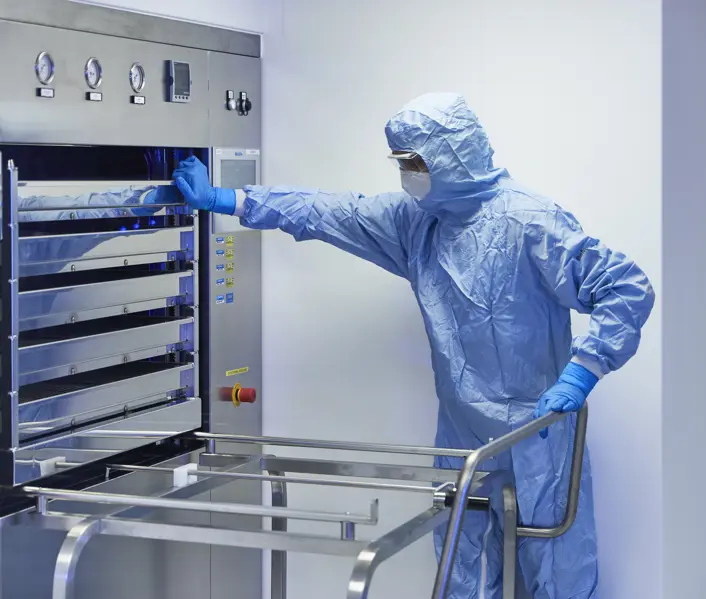
AI’s potential for transformation is being seen in pharma services. Dee Athwal, a pharma and biotech executive for 30 years, spoke at Inflexion’s annual Pharma Services dinner. The dinner brought together leaders from across the sector to discuss the emerging trends shaping the industry.
Following the event, Dee expanded on the thinking he had shared regarding AI’s potential in the sector.
What are the most material ways AI is changing pharma services today?
For me, pharma services covers five main buckets: Contract Research Organisations (CROs, anything from discovery testing through to running clinical trials); Regulatory affairs support; Contract Development and Manufacturing Organisations (CDMOs, actually making material for trials and commercial supply); Data management and analytics; and Formulation and CMC (Chemistry, Manufacturing and Controls).
Across those, the most material impact I’m seeing today is in discovery and development services, and in clinical trial patient recruitment.
On the discovery and development side, AI is now embedded in the way many vendors support drug design. A good, albeit an extreme example, is LILA Sciences. Their business model has partners come with a scientific problem, and then their “Scientific Superintelligence” platform takes over: their AI system will formulate a hypothesis addressing the partner’s problem, design the experiments, run those experiments in a fully robotic lab termed AI Science Factory, collect and analyse the data and make a determination of whether the data fits with the hypothesis, refine the hypothesis, if needed, and redesign the experiments and repeat the cycle.
Human input comes at the start by posing the initial question and is then required to keep the infrastructure running. What used to take years or at least months in a modern lab can be performed by LILA in days.
The second area where AI is clearly changing pharma services is patient recruitment for clinical trials. Traditionally, you rely on physicians at each site recruiting patients for any given clinical trial and evaluate if the patient in front of them is a match for inclusion in the trial. The potential patient is evaluated against a list of inclusion and exclusion criteria typically manual and can be subjective. What we’re seeing now is AI systems that scan electronic medical records across hospitals. They don’t “look at” patients as such, they analyse their records: age, sex, diagnosis, stage of disease, concomitant medications, previous treatments and so on. The system then flags patients who match a trial’s inclusion criteria.
That does two important things. Firstly, it makes recruitment more predictable – you can estimate enrolment timelines and budgets accurately and avoid opening sites that will be slow to recruit. It also improves patient selection – as a drug developer, I want patients who fit the profile my drug was designed for, not relying on the physician opinion of whether a patient is a good fit.
Where are we seeing real productivity or quality gains versus promising pilots that have not created impact?
AI is delivering productivity in several areas, including target identification and compound screening by using large biological and chemical datasets to propose and prioritise targets and hits; protein structure prediction and modelling, which informs which molecules are worth pursuing and how they might bind; personalised genetic medicines – particularly in the use of CRISPR-based technologies in discovery and therapeutics where AI enhances guide RNA design and predicts off-target activities, improving editing efficiency.
For genetic medicines, the volume of sequence data is enormous. It simply isn’t possible for a human to review, process and integrate all the information; it has to be an automated method that is able to read, perform one or more analyses and provide context specific responses.
I’m more cautious however around the broader claims that AI will dramatically accelerate the journey from discovery to approved drug. There is a lot of promise, but not yet any example where AI can be credited for the entire drug development cycle, starting with target identification, drug design and optimisation through clinical development and approval.
Insilico Medicine is considered to be the furthest along this journey. They started by using their AI PandaOmics platform to identify a novel target for idiopathic pulmonary fibrosis (IPF) – a difficult and complex fibrotic lung disease with poor treatment options. Once the target (TNIK) was identified, the company utilised its AI small molecule generation platform, Chemistry42, to design a small molecule against the target.
That AI-designed drug has passed preclinical testing and completed both Phase I and Phase IIa clinic studies. The company has reported it took approximately four years from “pushing the button” to the completion of Phase IIa, which is impressive. But it’s just one case and the drug has yet to enter Phase III studies.
AI is clearly delivering real gains in early discovery and design, but the industry is still waiting for broad, repeatable proof that this will translate into a large number of faster approvals.
How is AI transforming areas of drug development?
A good example I’d give is AlphaFold. This is an AI system that predicts protein 3D structure de novo starting from its amino-acid sequence. In drug development terms, it means we can now get accurate structural predictions for targets where experimental structures might be unavailable or very slow to generate. The accuracy of the predictions is dependent on several factors and far from perfect, with even highly accurate predictions requiring revisions based on experimental data.
Predicted structures can be used to understand how and where to bind a target and design antibodies or small molecules using classical discovery methods, but with a much better starting point. AlphaFold doesn’t replace drug discovery; it accelerates and guides it.
Another important area is pharmacovigilance of approved drugs – monitoring the safety of drugs once they’re on the market. Companies have a legal duty to collect and analyse safety data from many sources: helplines, physician reports, patient calls, and so on. Historically, much of that was manual with data fragmented across the different capture sources and geographies.
What we’re seeing now is AI-based pharmacovigilance platforms that ingest data from all those channels in near real time, look for unusual patterns (for example a cluster of similar complaints in a particular region), and flag potential issues, such as a problematic drug batch, much faster than a purely manual process would allow.
Some CROs are already offering this as a service. When it works well, it allows faster, more targeted responses – for example, identifying and addressing a manufacturing issue before it becomes a widespread problem.
AI is already transforming specific, well-defined parts of drug development and pharma services – experimental workflows, recruitment, safety – while the broader narrative about revolutionising the whole pipeline is still a work in progress and will critically be dependent on guidance from drug regulators, on the extent to which AI can be utilised in the clinical development of drugs.
Ambitious businesses can grow faster with the right capital and expertise, with Inflexion’s flexible funding offering minority or majority capital and access to a sizable team to accelerate growth. The Inflexion team has significant experience in supporting the growth of a number of healthcare companies of different sizes, with recent successes such as ELCG and Medivet, and a growing portfolio which includes CNX Therapeutics, ensera, Proteros, Rosemont Pharmaceuticals, Tierarzt, Upperton Pharma Solutions and Village Vets. All have access to Inflexion’s value acceleration strategies of M&A, digital enhancement, international expansion, commercial effectiveness, sustainability and talent management.